

E-Way Bill Under GST: Limits, Rules & How to Generate It


30-Second Summary
The movement of goods under GST is more than simply moving them from one place to another; it is about being compliant at every step of the way. An E-Way Bill is an online document that must be generated when goods are transported beyond the prescribed threshold limit. It helps businesses ensure smooth transportation while preventing tax evasion. This guide explains when an E-Way Bill is required, who must generate it, the applicable threshold limits, exemptions, and the step-by-step process to generate it online.
What Is an E-Way Bill?
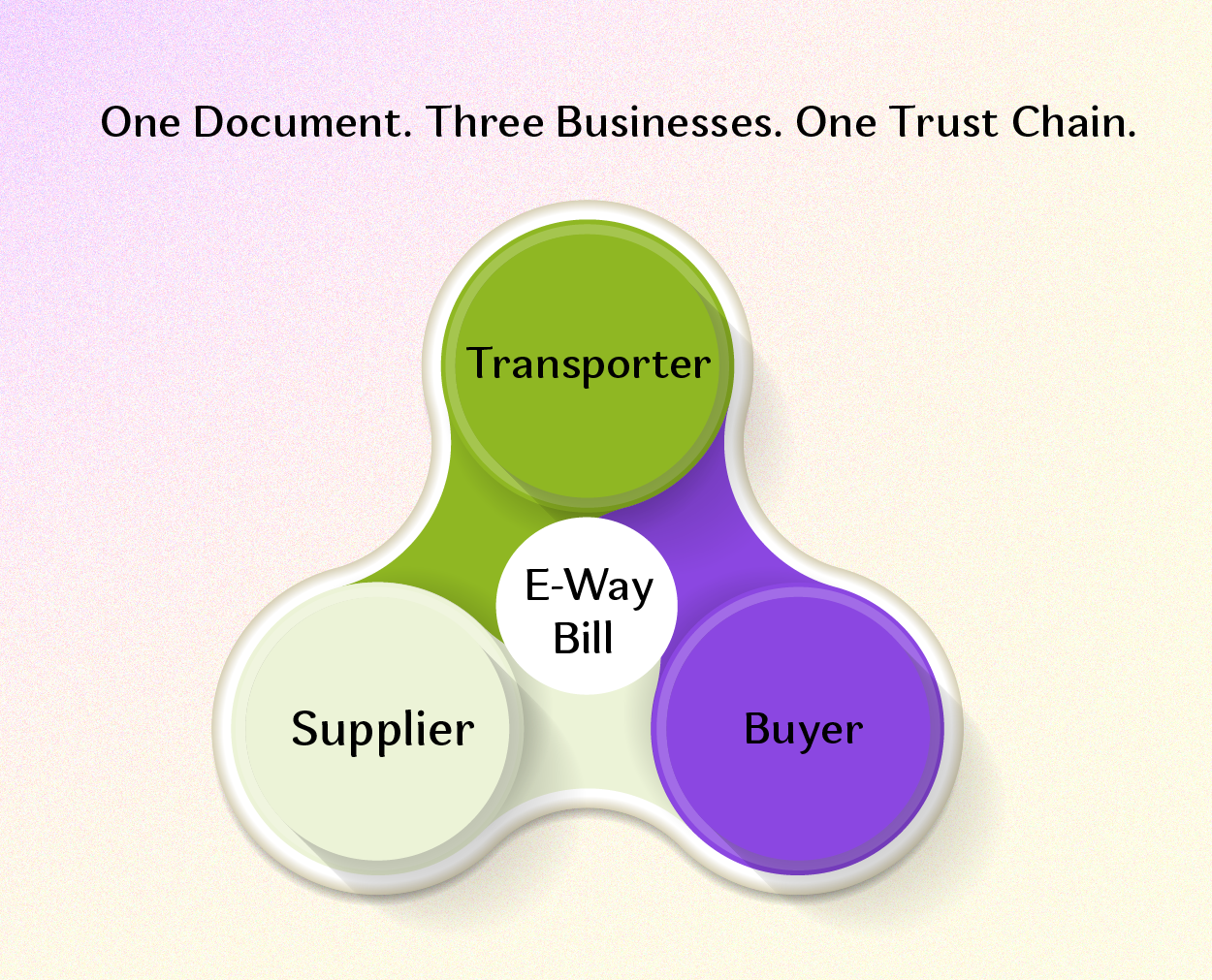
An e-way bill is an electronically generated document required when goods move between a supplier’s and a buyer’s place, once the value of goods crosses the state-wise, specified threshold limit for intra-state sales, or ₹50,000 for inter-state sales. It must be generated along with details of the mode of transport road, rail, air, or ship.
The e-way bill contains the following information:
- Information about the supplier and recipient
- Details of the goods being transported
- Transporter details
- Vehicle number
- Distance between the goods being dispatched and delivered
- Mode of transport
- Document type
- Supply type
This system ensures that goods being transported comply with GST laws and helps prevent tax evasion.Enroll in TallyPrime with GST Course
Features of the E-Way Bill System
- Electronic Generation: E-way bills are generated online through a centralised portal. This eliminates the need for physical documentation and reduces paperwork.
- Unique E-Way Bill Number (EBN): Each e-way bill is assigned a unique EBN, which is accessible to the supplier, recipient, and transporter. This number acts as a reference for tracking the movement of goods.
- Validity Period: The e-way bill has a specific validity period depending on the distance the goods need to travel.
- Real-Time Tracking: Goods in transit can be tracked using the E-Way Bill number, helping reduce illegal movement.
- Multiple Modes of Transport: The system supports transportation via road, rail, air, and waterways, making it more flexible.
- Consolidated E-Way Bills: A single consolidated e-way bill can be generated for multiple consignments.
- Easy Cancellation: If an e-way bill is generated incorrectly, it can be cancelled within 24 hours.
Who Should Generate the E-Way Bill?
- Registered Person (Supplier or Recipient): If goods are transported by a registered taxpayer, they must generate the e-way bill.
- Transporter: If the supplier or recipient does not generate the e-way bill, the transporter must generate it.
- Unregistered Person: If an unregistered person supplies goods to a registered person, they can generate the e-way bill by enrolling on the GST portal.
State-Wise E-Way Bill Limits
| Category | States | E-Way Bill Threshold Limit |
|---|---|---|
| Standard Limit (Most States) | Arunachal Pradesh, Assam, Andhra Pradesh, Chandigarh, Haryana, Karnataka, Manipur, Meghalaya, Nagaland, Odisha, Sikkim, Telangana, Tripura, Uttar Pradesh, Uttarakhand, West Bengal, Puducherry | ₹50,000 (Intra-State & Inter-State) |
| Higher Intra-State Limit | Bihar, Delhi, Jharkhand, Maharashtra, Punjab, Tamil Nadu | ₹1,00,000 (Intra-State) ₹50,000 (Inter-State) |
| Conditional / Item-Based Limit | Chhattisgarh, Goa, Gujarat, Himachal Pradesh, Madhya Pradesh | ₹50,000 (Specific Goods) ₹50,000 (Inter-State) |
| Special Cases / Exceptions | Jammu & Kashmir, Kerala, Mizoram, Rajasthan | Varies (No requirement / ₹10,000 / up to ₹2,00,000) ₹50,000 (Inter-State) |
Cases Where E-Way Bill Is Not Required
- Goods transported below the specified threshold limit, except in certain cases where an e-way bill is mandatory.
- Transportation of exempt goods.
- Transportation by non-motorised vehicles.
- Return of empty containers to the supplier after the goods have been delivered.
- When the distance between the supplier and the weighbridge is 20 km or less.
- When the distance between the place of dispatch and the transport agency is 50 km or less.
Step-by-Step Registration Process for E-Way Bill
For beginners, the registration process can seem technical, but it becomes simple when broken down into clear steps.
- GST Registration (Valid GSTIN is required for registering in the e-way bill portal)
- Visit the E-Way Bill Portal
- Select ‘Registration’ Option
- Enter GSTIN
- Verify Details appearing on the screen
- Generate OTP
- Create Username and Password
- Login to the Portal
- Generate E-Way Bill either directly through the portal or any of the GSP’s
Stay Ahead with E-Way Bill
The e-way bill system of the GST ensures that there is transparency in the movement of goods. It helps in reducing the errors, tax evasion and improves efficiency. It is much easier as it does not require any paperwork. Once a user understands who, when and how an e-way bill is generated, the process becomes part of the routine rather than complexity. The threshold limits, validity and accuracy are the highly dependable components of an e-way bill. This ensures smooth transportation and keeps you fully aligned with the GST framework.
Frequently Asked Questions (FAQs) about E-Way Bill
Question 1: What is an E-Way Bill under GST?
Answer: An E-Way Bill is an electronically generated document required for the movement of goods under GST when the value of goods exceeds the prescribed threshold limit. It contains details of the supplier, recipient, goods, transporter, distance and mode of transport.
Question 2: When is an E-Way Bill mandatory under GST?
Answer: An E-Way Bill is mandatory when the value of goods being transported exceeds ₹50,000 for inter-state movement and the prescribed state-wise threshold limit for intra-state movement.
Question 3: Who is responsible for generating the E-Way Bill?
Answer: The E-Way Bill can be generated by anyone who is responsible for transporting the goods under GST such as the supplier, the recipient, or the transporter.
Question 4: What details are required to generate an E-Way Bill?
Answer: To generate an E-Way Bill, details such as GSTIN of supplier and recipient, invoice number, value of goods, transporter details, vehicle number, distance and mode of transport are required.
Question 5: What is the validity period of an E-Way Bill?
Answer: The validity of an E-Way Bill depends on the distance the goods need to travel. Longer distances receive a longer validity period under GST rules.
Question 6: In which cases is an E-Way Bill not required?
Answer: An E-Way Bill is not required for exempt goods, non-motorised transport, goods transported below the threshold limit, empty containers, and certain short-distance transportation cases specified under GST.
Question 7: How can a business generate an E-Way Bill online?
Answer: Businesses can generate an E-Way Bill by registering on the E-Way Bill portal using their GSTIN, creating login credentials, and entering invoice and transporter details online.

Nita R
Nita is a content writer specialising in Accounting, Finance, GST, and Taxation. She creates easy-to-understand, research-driven content that simplifies complex financial and tax concepts for learners, professionals, and businesses. Her expertise lies in translating technical accounting and GST topics into practical insights, helping readers stay informed about tax compliance, financial processes, and industry best practices. Through her content, she aims to make accounting and taxation accessible, accurate, and relevant for today's evolving business environment.