

From Classroom Learning to Skill Development: Understanding Credit-Based Courses


30-Second Summary
What if learning a skill could do more than just add to your knowledge? What if it could also earn you academic credits? That’s the idea behind the credit-based system!
It recognises learning through eligible courses and helps students build skills alongside their regular education. Supported by NEP 2020 and the National Credit Framework (NCrF), this approach brings academic learning and practical skills closer together. And here’s something worth exploring: Tally Education has introduced credit-based courses through which learners can earn 2 credits on successful completion. Curious to know how it works? Let’s find out!
Introduction
Imagine you’re studying commerce in college. Along with your regular subjects, you get an opportunity to learn a practical skill that could help you in your future career. Now, what if that learning could also earn you academic credits?
This is where the credit-based system comes in.
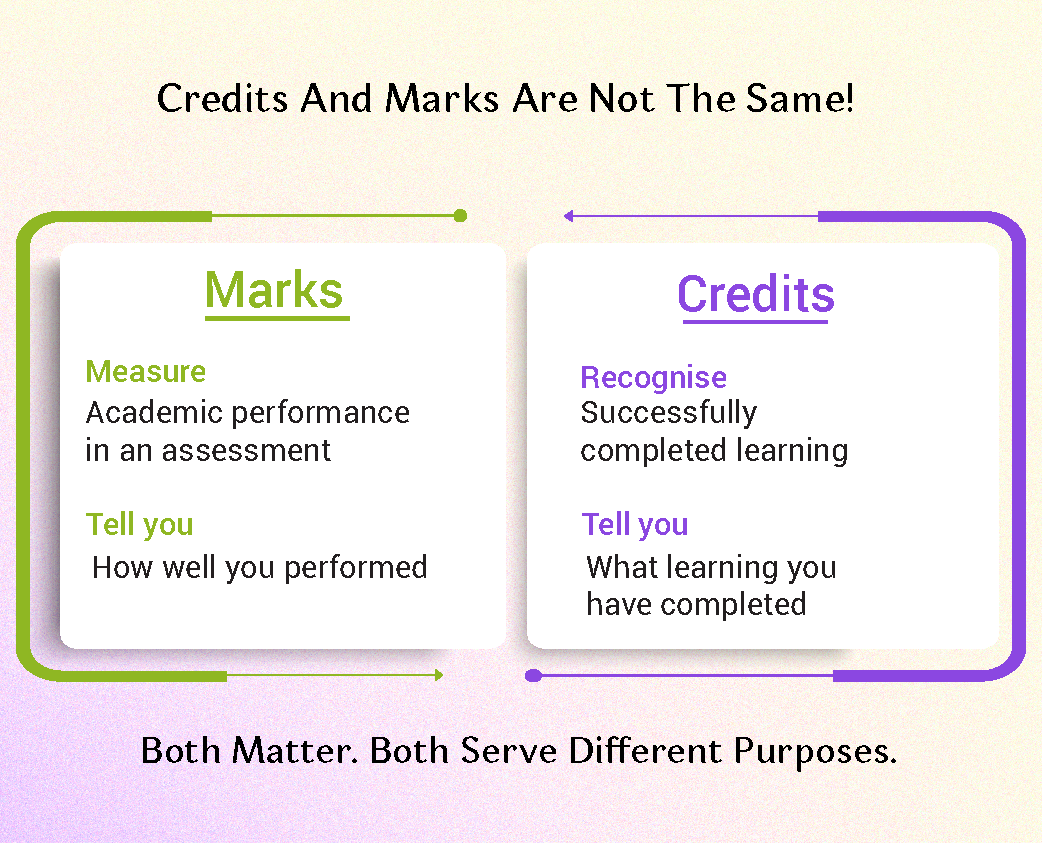
In simple terms, academic credits help track the learning a student successfully completes. Instead of looking only at marks, the system also recognises learning through eligible courses and other approved learning activities.
India’s National Education Policy (NEP) 2020 and National Credit Framework (NCrF) support a more flexible approach to education, bringing academic learning and skill development closer together. The aim is to give students opportunities to explore different areas of learning while working towards their academic goals.
But what does earning academic credits actually mean? How can a credit-based course help you, and what should you know before enrolling in one?
Let’s understand the basics.
What is the Credit-Based System?
The Credit-Based System is an approach to education that measures a learner’s progress through credits earned by successfully completing courses or other recognised learning activities.
Each course is assigned a certain number of credits based on factors such as learning hours, course requirements and the applicable academic framework. Students earn these credits by meeting the course’s assessment and completion requirements.
The credits accumulated by a student count towards the requirements of their academic program, subject to the rules of the institution.
Unlike a rigid curriculum, a credit-based system can offer greater flexibility by allowing students to choose electives, explore different disciplines and take up skill-based courses, depending on their institution’s guidelines.
In simple terms, academic credits help recognise a student’s learning and track their progress towards an academic qualification.
Why is the Credit-Based System Important?
A student’s learning journey doesn’t have to be limited to the subjects covered in their regular curriculum. The credit-based system creates opportunities to explore additional courses and have that learning recognised through academic credits.
It helps students:
- Track academic progress: Understand how much of their programme they have completed through earned credits.
- Explore new subjects: Choose eligible courses beyond their core curriculum.
- Build practical knowledge: Complement classroom learning with relevant skills.
- Plan their learning journey: Accumulate credits and progress towards academic goals, subject to institutional requirements.
This makes learning more flexible and gives students more opportunities to shape their academic journey.
NEP 2020 and National Credit Framework (NCrF)
The National Education Policy (NEP) 2020 brought in a fresh vision for education in India. Its main objective is to build an education system that is flexible, inclusive, multidisciplinary and skill-based, to address the needs of the 21st century.
Supporting this vision is a key initiative, the National Credit Framework (NCrF).
The NCrF brings together academic education, vocational education and experiential learning in one framework. This suggests that students can obtain credits not only from classroom learning but also from internships, skill-based training, projects and other recognised learning experiences.
Some key features include:
1) Integration of learning pathways: Brings academic, vocational and skill-based learning within a common credit framework.
2) Credit accumulation and transfer: Supports the accumulation and transfer of eligible credits under applicable regulations.
3) Multiple entry and exit: Supports flexible progression through eligible academic programmes.
4) Recognition of prior learning: Provides for the recognition of eligible skills and learning acquired through prior experience.
5) Academic Bank of Credits (ABC): Facilitates the digital storage and management of academic credits and supports their transfer in accordance with applicable rules.
These initiatives aim to give learners greater flexibility in planning their education and developing skills relevant to their interests and career aspirations.
What Are College Credits?
Academic credits represent learning successfully completed by a student. The number of credits assigned to a course depends on the applicable academic framework and the institution’s requirements.
Under the National Credit Framework, one credit corresponds to 30 notional learning hours. A reference of 1,200 notional learning hours corresponds to 40 credits in an academic year, subject to assessment and the framework’s provisions.
Notional learning hours may include activities such as:
a) Classroom learning and tutorials
b) Practical and laboratory work
c) Assignments and projects
d) Internships and vocational training
e) Field visits and experiential learning
f) Other recognised learning activities
This approach considers the broader learning effort involved in a course rather than classroom attendance alone.
It is important to remember that completing a certain number of learning hours does not automatically guarantee credits. Learners must meet the relevant assessment and completion requirements.
Types of Courses in the Credit System
The credit-based system has one of the biggest advantages i.e. variety of courses offered to the students. Instead of studying only the required subjects, learners can opt for courses that interest them and they can relate to their career aspirations.
- Core Courses: Core courses cover the essential subjects of a program and are generally compulsory for students following that qualification.
Example: Financial Accounting or Business Economics in a commerce course. - Elective Courses: Students are provided with a list of subjects from which they can select subjects of their own interest and academic goals.
Example: A commerce student may take an elective in taxation, analytics or finance, depending on what is offered by their institution. - Courses Based on Skill: Skill-based courses are designed to provide students with practical and vocational skills that can be applied in real-world applications.
Example: Computerised accounting, GST compliance, financial modelling or data analytics. - Foundation Courses: Foundation courses are those that provide students with basic knowledge and skills that will support their future learning. Example: Communication skills, basic maths or information technology depending on the program.
- Minor or Additional Courses: Some universities offer the choice to students to choose a minor subject or to take subjects outside their main discipline. Availability and credit requirements are dependent on the institution’s curriculum.
Skill-based courses can be particularly useful for students who want to complement their academic learning with practical, industry-relevant knowledge.
What are SGPA and CGPA?
Academic credits track the courses a student completes, while SGPA and CGPA help measure their academic performance.
What is SGPA?
Semester Grade Point Average (SGPA) reflects a student’s academic performance in a particular semester, based on the grades and credits earned across subjects.
What is the CGPA?
Cumulative Grade Point Average (CGPA) reflects a student’s overall academic performance across multiple semesters.
In simple terms, SGPA represents performance in one semester, while CGPA gives an overall picture of academic performance.
Why are skill-based courses gaining importance?
Today’s employers are looking for candidates with academic knowledge and practical skills. As industries evolve with advances in technology and automation, earning a degree alone is frequently not enough. This is where the skill-based courses come into play.
Courses like Accounting Software, GST Compliance, Financial Modelling, Microsoft Excel, Business Analytics, Digital Marketing, Artificial Intelligence and Data Analytics help students acquire the industry-relevant skills to complement their academic qualifications.
The National Education Policy 2020 also encourages the integration of vocational and skill-based education in higher education, resulting in more versatile and employable graduates in a competitive job market.
Explore Credit-Based Skill Courses from Tally Education
What if you could build practical skills alongside your academic studies and earn skill credits for completing an eligible course?
With credit-based learning, students can explore opportunities to strengthen their practical knowledge while working towards their academic goals.
Tally Education has introduced credit-based courses like Professional Financial Accounting with GST using TallyPrime and Advanced Accounting in P2P-O2R-R2R with GST using TallyPrime that combine structured learning with practical skills in accounting, finance and GST. These courses aim to help learners complement their academic knowledge with competencies relevant to the workplace.
On successful completion of the applicable course and assessment requirements, learners can earn 2 skill credits.
These courses can be an opportunity for students to build practical knowledge, gain exposure to industry-relevant tools and understand how concepts learned in the classroom are applied in real business situations.
Conclusion
Learning goes beyond textbooks and examinations. It’s about building practical skills and preparing for future opportunities. The credit-based system gives students more flexibility to explore new areas of learning while complementing their academic knowledge. With Tally Education’s credit-based courses offering 2 skill credits on successful completion, students can take another step towards developing practical, industry-relevant skills. Explore, learn and make every learning opportunity count!
Frequently Asked Questions
Question 1: What is the Credit System in higher education?
Answer: A credit-based system recognises a student’s learning through credits earned by successfully completing courses and meeting their assessment requirements. These credits contribute towards the requirements of an academic programme.
Question 2: What is the difference between CBCS and National Credit Framework (NCrF)?
Answer: The choice-based credit system (CBCS) allows students to choose from different courses within an academic program while the National Credit Framework (NCrF) is a wider framework that brings academic, vocational and skill-based learning under a common credit framework.
Question 3: How many learning hours are required for one academic credit?
Answer: Under the National Credit Framework (NCrF), one academic credit corresponds to 30 notional learning hours. However, learners must also meet the applicable assessment and course completion requirements.
Question 4: What are the different types of courses in the credit-based system?
Answer: Common course categories include core, elective, foundation, skill-based and minor courses. The options available depend on the institution and the academic programme.
Question 5: What is the difference between SGPA and CGPA?
Answer: SGPA measures a student’s academic performance in a particular semester, while CGPA reflects their overall performance across multiple semesters.
Question 6: What is the Academic Bank of Credits (ABC)?
Answer: The Academic Bank of Credits is a digital platform that helps store and manage eligible academic credits. It also facilitates credit transfer, subject to applicable rules and institutional acceptance.
Question 7: How many credits can students earn through Tally Education’s credit-based courses?
Answer: Tally Education has introduced two credit-based courses that offer 2 skill credits each on successful completion, subject to the respective course requirements.

Nita R
Nita is a content writer specialising in Accounting, Finance, GST, and Taxation. She creates easy-to-understand, research-driven content that simplifies complex financial and tax concepts for learners, professionals, and businesses. Her expertise lies in translating technical accounting and GST topics into practical insights, helping readers stay informed about tax compliance, financial processes, and industry best practices. Through her content, she aims to make accounting and taxation accessible, accurate, and relevant for today's evolving business environment.