

Upgrade Your Skills with the Right Payroll Course Online Today


30-Second Summary
Managing payroll today is no longer a simple back-office task. It is a high-risk, compliance-driven function where even small errors can lead to penalties, employee dissatisfaction, and cash flow issues. Manual processes are slow and error-prone. You need structured, automated, and audit-ready systems. That is where the right Payroll Course and certification make a real difference. In this guide, you will learn how a Payroll certification course builds accuracy, control, and confidence, and how to choose the right training to become job-ready in payroll management.
Why Are Payroll Skills More Important Than Ever in 2026?
Most people, even today, assume payroll is just about calculating salaries and sending out payslips. But anyone who has actually sat down to process payroll for a business knows it is a very different story. There are statutory deductions to get right. There are compliance deadlines that do not move. And there are consequences, sometimes serious ones, when errors slip through.
If you are building a career in accounting, HR, or finance, getting your payroll skills in order is no longer optional. It is one of the fastest ways to make yourself genuinely valuable in the workplace. The good news is that, with the right payroll course, you do not have to figure it out on your own.
Why Payroll Is More Demanding Than It Looks
Here is something many accounting students discover only after they step into their first job. There is a significant gap between knowing how payroll works in theory and actually being able to run it without errors.
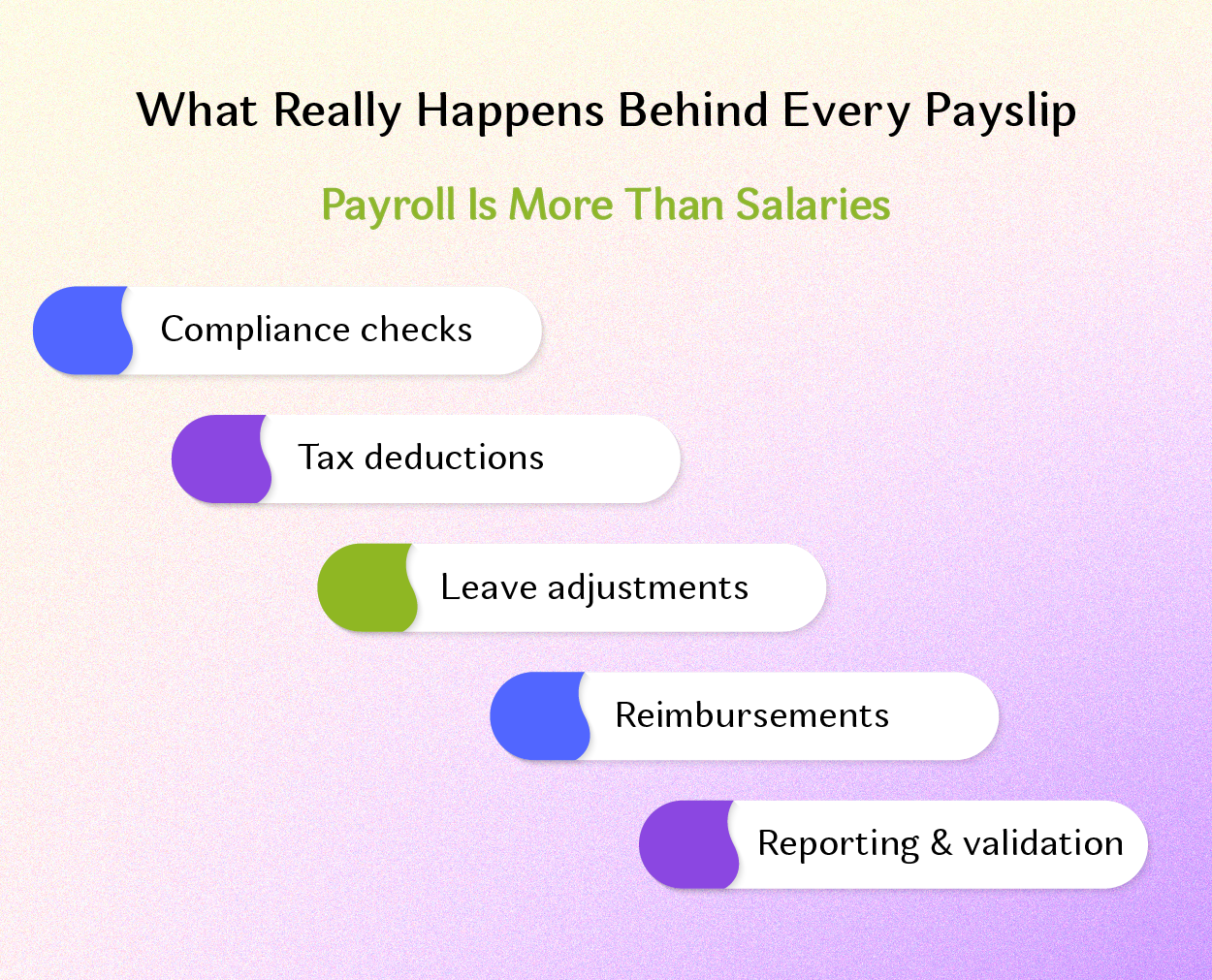
In a real business environment, payroll touches almost everything. Salaries, PF contributions, ESI deductions, TDS calculations, leave adjustments, reimbursements. Every element has to be accurate because a single mistake does not just affect one payslip. It can trigger compliance notices, upset employees, and disrupt the business’s cash flow.
That is why employers are not just looking for candidates who have studied payroll. They want professionals who have practised it, understand the workflows, and can handle the pressure of monthly deadlines.
What a Structured Payroll Certification Course Actually Teaches You
A good payroll certification course takes you well beyond theory. It walks you through the actual processes that businesses run every month, step by step, so that nothing feels unfamiliar when you are sitting at a real desk with real data in front of you.
The core areas you will cover include salary structure setup, where you learn how to define components like basic pay, HRA, allowances, and deductions in a way that is both tax-efficient and compliant. You will then move into statutory compliance, which covers PF, ESI, and TDS calculations in detail. This is often where most payroll errors happen, and structured training gives you the guardrails to avoid them.
Beyond calculations, a strong payroll certification course will also teach you payroll processing workflows, payslip generation, and how to produce the reports that management and auditors actually need. You stop guessing and start understanding the full flow from start to finish.
If you want to build these skills in a practical, guided environment, the Mastering Payroll Management with Tally course from Tally Education is designed exactly for this. It covers real payroll scenarios using TallyPrime, the software that thousands of Indian businesses rely on every day.
The Confidence That Comes From Practical Training
There is something worth understanding about how employers evaluate candidates during interviews. Two people with similar academic backgrounds can walk into the same room, and within five minutes, the difference is visible.
The candidate who has done proper payroll training speaks differently. They talk about workflows. They can explain what happens when a PF deduction is miscalculated. They know how to reconcile payroll data before the month’s close. They have seen the process end-to-end, and that shows.
The other candidate, however well-intentioned, is still learning on the job. And in payroll, that learning curve has a real cost for the business.
This is what good payroll management training actually delivers. Not just knowledge, but the kind of practical familiarity that makes you calm and capable under pressure.
Who Should Be Thinking About This Right Now
If you are a commerce or accounting student who is approaching the end of your studies, this is exactly the right time to invest in a payroll course. The job market rewards candidates who can demonstrate real skills, not just certificates.
If you are already working in accounts or HR operations and feel uncertain when payroll deadlines arrive, structured online payroll training can close those gaps quickly and give you a more reliable foundation.
And if you are switching careers into finance or accounting from a different background, a solid payroll certification course gives you a structured entry point. You do not need prior experience. You need the right guidance.
What Changes Once You Have These Skills
Once you complete strong Payroll Management Training, the roles available to you expand considerably. You become eligible for positions like payroll executive, HR operations specialist, accounts executive, and compliance assistant. These are stable, in-demand roles across industries of every size.
More importantly, something shifts in how you approach your work. Payroll stops feeling like a monthly risk event and starts feeling like a system you control. You know what to check, what to validate, and where errors tend to hide. That is a genuinely different experience of work.
The Right Time to Start Is Now
Payroll skills are not something you pick up passively. They come from structured exposure to real processes, real software, and real compliance scenarios.
The Mastering Payroll Management with Tally course gives you exactly that. Practical workflows, guided learning, and the confidence to handle payroll independently from day one. You are not behind. You just need the right starting point.
Ready to take the next step? Explore the Payroll Management Course and begin building payroll skills that employers actually value.
Frequently Asked Questions
Question 1: Who should take a Payroll course?
Answer: Anyone interested in accounting, HR, or finance roles. It is ideal for students, working professionals, and career switchers.
Question 2: Is a Payroll certification course difficult?
Answer: No. With structured training, it becomes simple and step-by-step. You learn through practical examples.
Question 3: What is the benefit of Payroll training?
Answer: You gain accuracy, compliance knowledge, and job-ready skills that employers value.
Question 4: How long does it take to complete a Payroll Certification Course?
Answer: Most courses can be completed in a few weeks, depending on the depth and learning pace.
Question 5: Does Payroll management training help in getting a job?
Answer: Yes. It improves your employability by giving you practical, real-world skills.

Tally Education
Tally Education empowers learners with industry-relevant skills in accounting, finance, taxation, and business management through practical learning and certifications. Our blogs are created and reviewed by subject matter experts to deliver accurate, practical, and up-to-date insights on accounting, GST, taxation, finance, and TallyPrime.